Caritas - The First Icelandic Christmas Seal
What does Caritas stand for?
In Latin, caritas originally meant dearness or high value, but in Christian Latin it became the word for charitable love — the virtue of caring for others.
It is closely related to the Greek word agápē, meaning selfless love.
Many organizations use the name Caritas to signal humanitarian work, kindness, and social support.
The Icelandic spelling Karitas is simply a localized version of the same word.
💬 As a name:
Karitas is used as a female given name in Iceland and carries the meaning “charity”, “kindness”, or “loving care.”
Introduction
Throughout the years I have always kept an eye on these stamps, as the name is part of my family history and therefore dear to me. It eventually happened that I was offered a portion of Sarah Petersson’s Caritas collection, and from that moment there was no turning back. As I began to explore the history of these stamps, it became clear that much of it remains untold, and some of what has been written is simply incorrect. For that reason, I have undertaken a modest investigation into their story, which I attempt to present on this website.
I will undoubtedly need to rewrite this page several times, as new details continually emerge that shed fresh light on the history of the stamps.
The research focuses on the stamps themselves—their print volume, where they were printed, and not least the precise date of their release. It is often claimed that the Danish stamp was the first Christmas seal ever issued, but is that certain? The release date of the Icelandic stamp in 1904 has never been established, and only once that date is confirmed can we formally determine whether the Danish stamp was indeed the first.
The role of Ragnheiður Hafstein Stefánsdóttir—long overlooked—will be brought into clear focus in this research.
The investigation will further look into the intended purpose of the funds raised for the Karitas children’s home—one of the best‑kept secrets in Icelandic child welfare! The first formally established infant home in the country, yet nowhere mentioned in our contemporary history. Where it was located, how long it operated, and why it ceased to exist are all questions that remain unanswered. My research has revealed the eventual fate of these charitable efforts, as their funds were transferred into the Ragnheiður Memorial Fund.
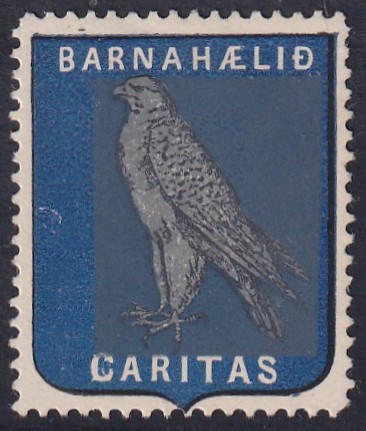
My attention also turns to the falcon symbol, which seems—consciously or unconsciously—to have been a powerful emblem widely used in Icelandic society at the time. It appears on this beautiful stamp, on Icelandic banknotes, in the logo of the national telephone service, in the logo of Íslandsbanki, and of course on the highest decoration awarded in Iceland: the Order of the Falcon. In the end, I hope all the pieces will fall into place, and that over time a coherent narrative will emerge—one that I will present on this site.
The World’s First Christmas Seal (1904)
The world’s first Christmas seal was issued in Denmark in 13/12 1904, created by postal clerk Einar Holbøll, who proposed selling a small charity label on Christmas mail to raise funds for children suffering from tuberculosis. The idea was approved by the Danish Postmaster and King Christian IX, and the first seal — showing Queen Louise of Denmark — became an immediate success. More than 4 million seals were sold in the first year, establishing a new tradition in charitable fundraising.
A Christmas seal is not a postage stamp but a charity label, purchased and placed on holiday mail to show support for health and welfare causes. For decades, Christmas seals helped fund tuberculosis sanatoriums, children’s homes, and public health campaigns. The concept spread rapidly, and by the mid‑20th century, over 100 countries had issued their own seals.
The 1904 Danish seal remains a symbol of how a simple idea — a small sticker on a Christmas letter — grew into a global movement for compassion and public health.
Image of the First Christmas Seal 1904
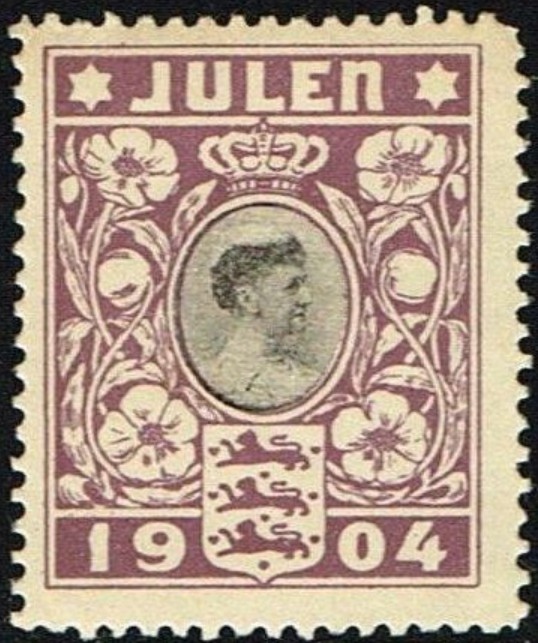
The photo above is from VF-auktion.dk.
Now to Iceland..
The origin of the 1904 Caritas Christmas Seal..
In my view, the origins of the first Caritas seal are somewhat unclear.
In the book Jólamerkin by Hauk Valdimarsson and Þór Þorsteins, it is stated that the seal was given to Iceland through the involvement of Ragnheiður Stefánsdóttir, the wife of Minister Hannes Hafstein, and that it was donated on behalf of the Danish Caritas, the charitable organization of the Catholic Church. The aim was to establish an infant care home (Vöggustofa) for the babies of impoverished mothers. At that time, the word vöggustofa did not yet exist, and the rather unfortunate term barnahæli was used instead.I have not found any contemporary sources that describe the involvement of Caritas in Denmark in this issue. But it can be stated with confidence that this historical explanation is incorrect, as Danish Caritas was not founded until 1947. One of the aims of this page is to gather information that sheds light on the origins of these seals, the history of the charitable work behind them, and what ultimately became of the Caritas organization.
News from the Postmaster in Reykjavik 01.01. 1905
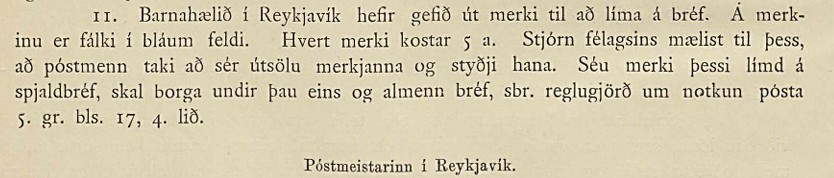
This news report is the first and only contemporary source I have found regarding the 1904 issue of the Caritas charity seals. From the wording, it can be inferred that the seals had already been released, meaning the report confirms that they arrived in Iceland before the end of the year. It is still uncertain when they were actually put on sale. No sources exist that provide that date.
The 1904 issue of the charity stamp, first Icelandic Christmas Seal, item originated from Sarah Petersson collection, very rare sheet. Almost all items on this page are originated from her collection.
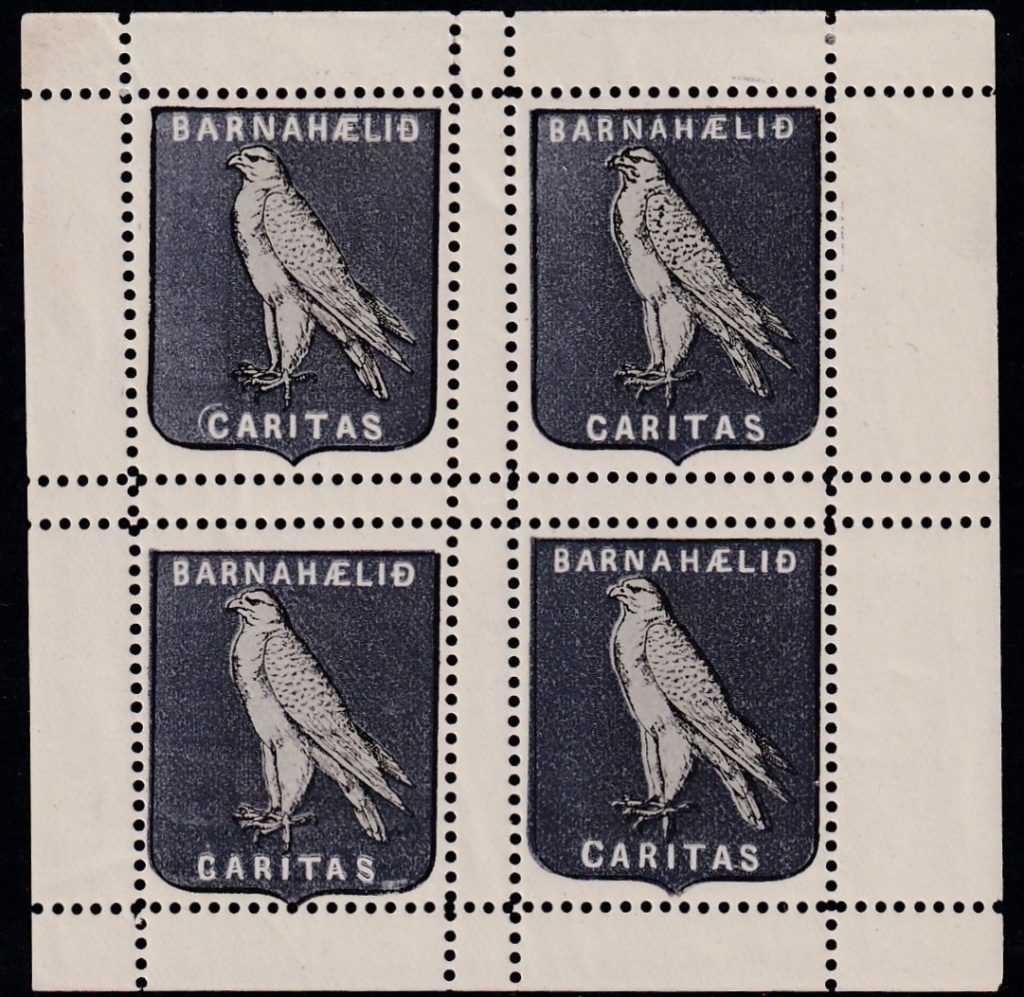
The Caritas 1904 issue - the stamps
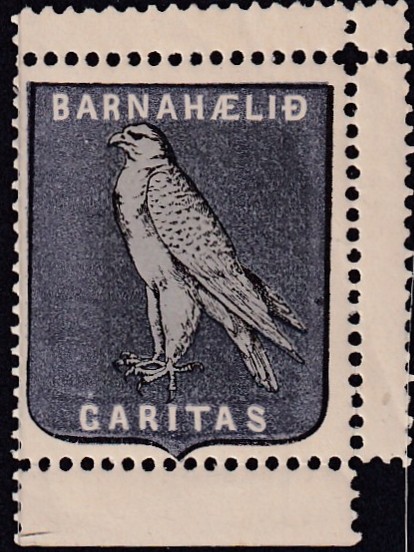
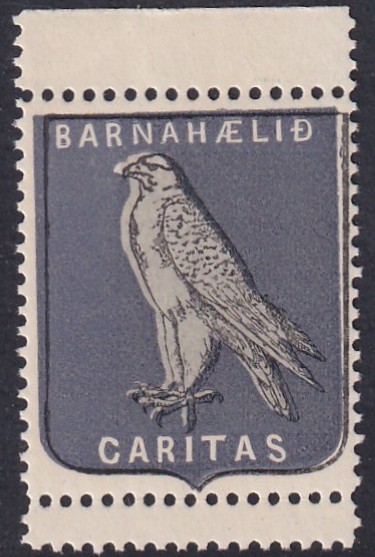
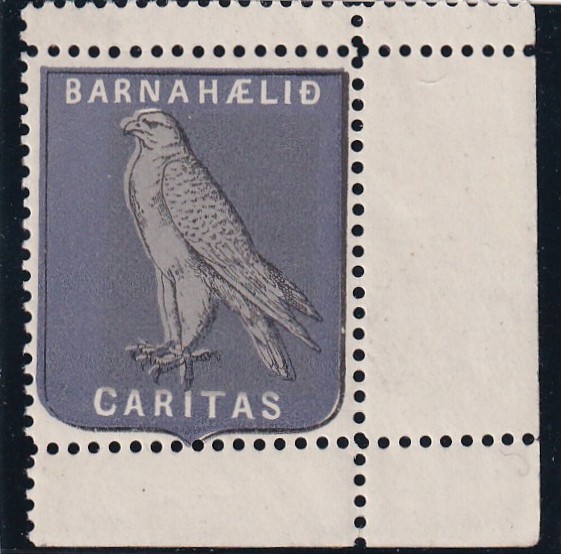
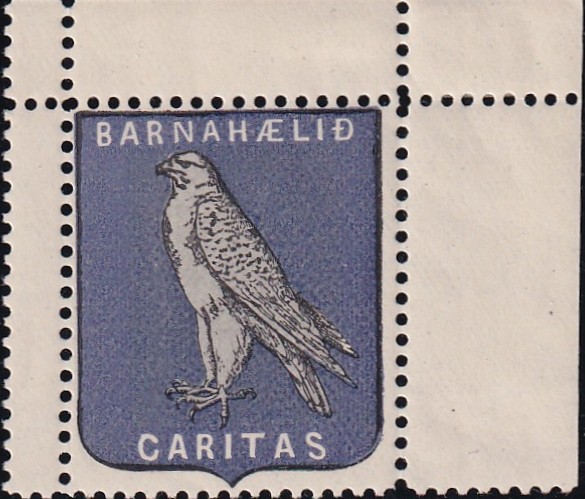
In the book by Haukur Valdimarsson and Þór Þorsteins, the stamps are described as having blue and black colouring, with a silver overprint forming a kind of frame. Each sheet contained four seals. As can be seen below, there is some variation in colour between the seals. I would also point out that in some of the seals there is a circle around the letter C, which characterizes the seal that appears first in each sheet, as shown in the image above and in seal number three below.
As for the total quantity issued, I have not found any sources that provide that information.
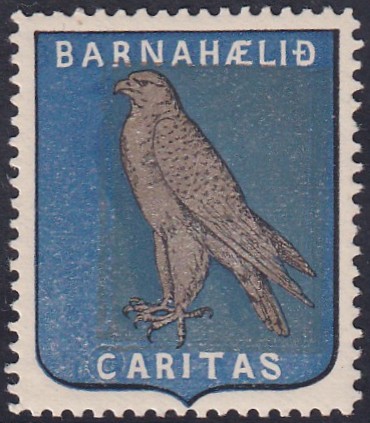
These six stamp show several colour variations in the 1904 issue.
The Karitas 1905 issue – the story
There are more sources about the 1904 issue in contemporary newspapers, both are from December 1905.
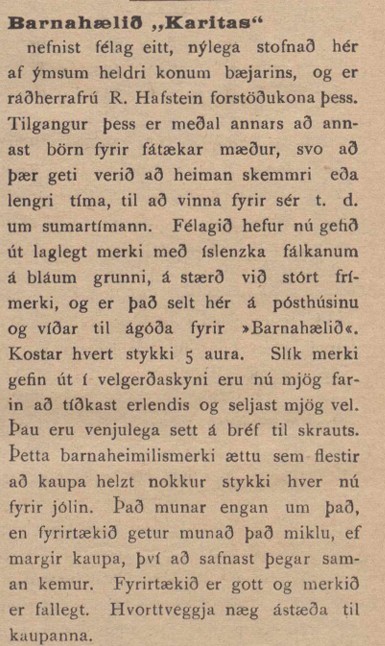
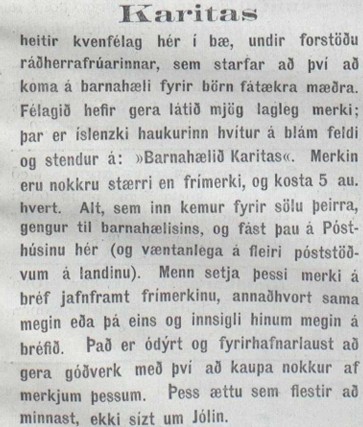
Above are two contemporary newspaper reports from Reykjavík and Þjóðólfur, which confirm the involvement of the minister’s wife in the seal issue and its intended purpose. They also describe the seal as it appeared when released. However, there is no mention whatsoever of any connection to the Danish Caritas charity organization.
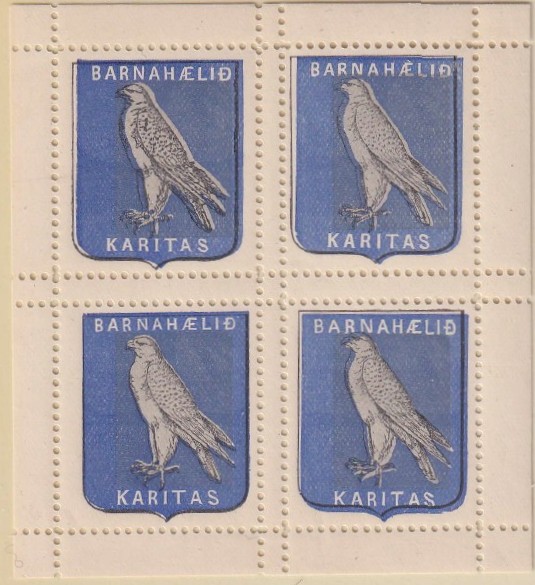
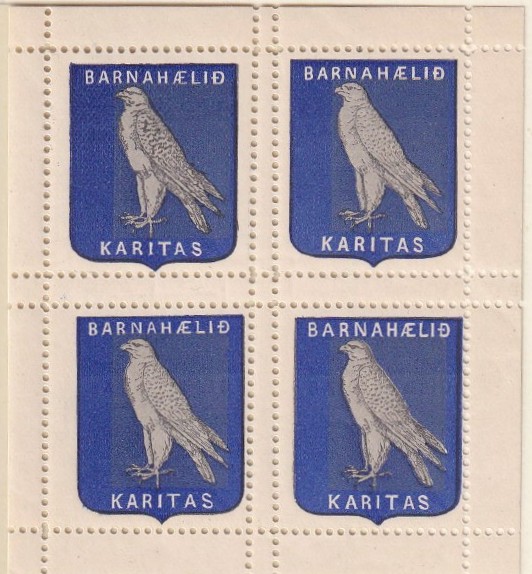
Two nice full sheets from the 1905 issue.
The Karitas 1905 issue - the stamps
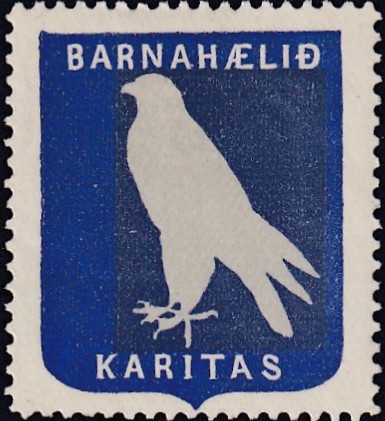
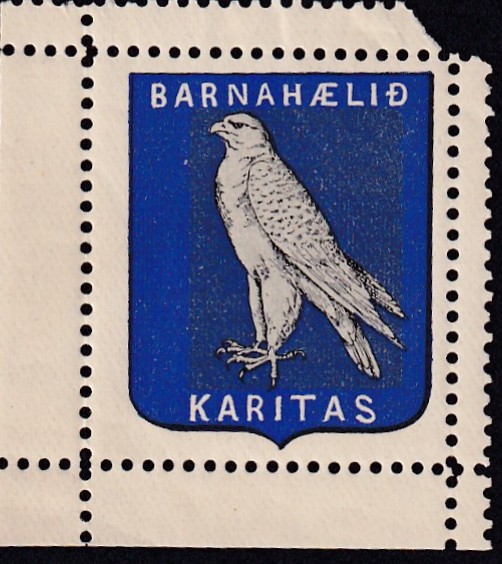
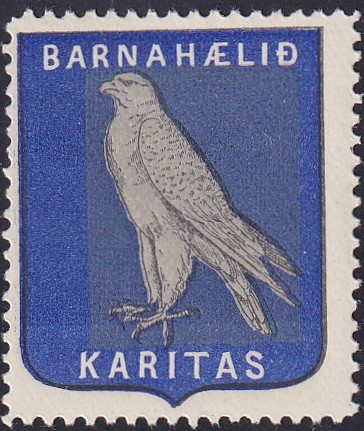
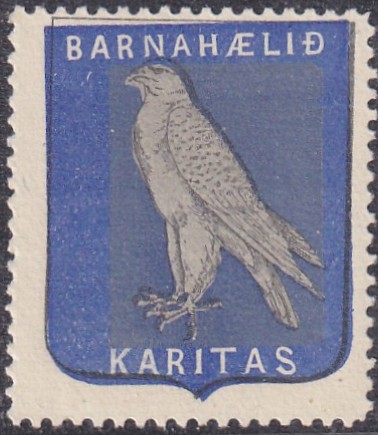
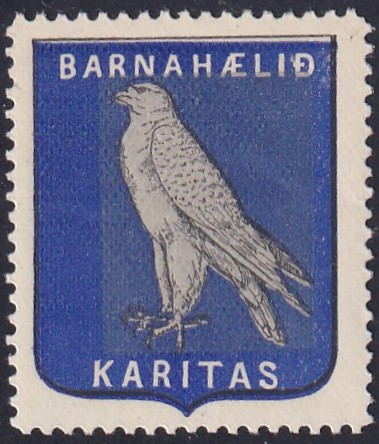
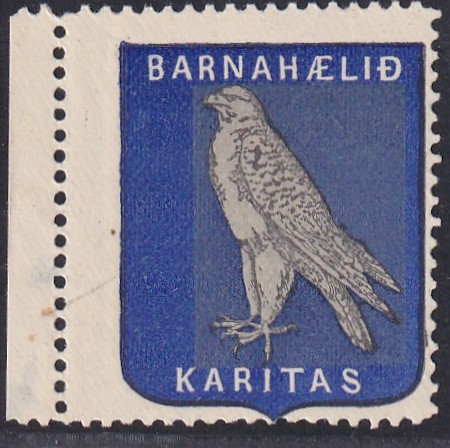
In the book by Haukur Valdimarsson and Þór Þorsteins, the seals are described as having light blue and black colouring, with a silver overprint forming a kind of frame. Each sheet contained four seals. As can be seen below, there is some variation in colour between the seals, as well as examples of significant deviations.
Regarding the total quantity issued, I have not found any sources that provide that information.
One major difference between the 1904 seals and the later ones is that the name Caritas changes to Karitas. No sources explain why the name was altered, but it is reasonable to assume that this was done to adapt the seal to Icelandic conditions and to associate it with the women’s association Kvenfélagið Karitas.
Six nice stamps from 1905 issue, with very interesting variation, from Sarah Peterson collection!
Something happens 1906...
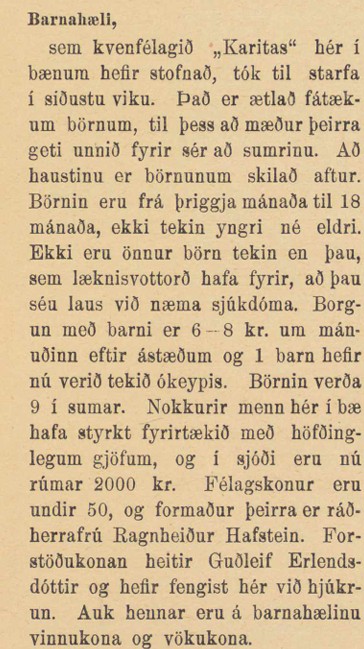
The above report is from Fjallkonan, dated 19 May 1906, and it states that during the previous week a children’s home began operating, founded by the women’s association Karitas. This provides direct evidence that the idea underlying the 1904 issue — the plan to establish a home for the infants of impoverished mothers — did in fact become a reality.
This report states that the association counted fifty women, and that its chair was Ragnheiður Hafstein, the wife of the minister — the very person who, in later accounts, was believed to have brought the 1904 issue to Iceland.
Then the focus turns to the Thorvaldsen Society…
In the Thorvaldsen Society’s 70th anniversary commemorative volume, there is a dedicated section on the establishment of the Child Upbringing Fund (Barnauppeldissjóður), spanning pages 76–83. Its creation — or more precisely, the resolution to establish it — was made at an extraordinary meeting of the society on 29 March 1906. Another extraordinary meeting was held on 23 May 1906, at which a fundraising campaign was launched.
What is significant for our narrative is that Ragnheiður Hafstein appears on the board of the fund on that meeting. According to the newspaper report mentioned above, she was the chair of the women’s association Karitas, which had just founded a children’s home under its auspices.
From 1913 onward, the Thorvaldsen Society issued Christmas seals to support the Child Upbringing Fund. The Caritas/Karitas seal issues ceased in 1911. Ragnheiður Hafstein passed away in 1913.
Then we turn to the history of Reykjavík…
In Guðjón Friðriksson’s history of Reykjavík, from 1994, on page 135, the children’s home Karitas is discussed. It reiterates what has already been established: that the institution was founded on the initiative of Ragnheiður Hafstein and that the children’s home was intended for the infants of impoverished mothers, accommodating children from three to eighteen months of age, and began operating in the spring of 1906. It is stated that the home remained in operation for several years.
Such institutions later came to be known as vöggustofur (infant homes).
It is also noted that at the same time, the Thorvaldsen Society established the Child Upbringing Fund with the aim of operating a similar institution for children — a plan that did not materialize until decades later.
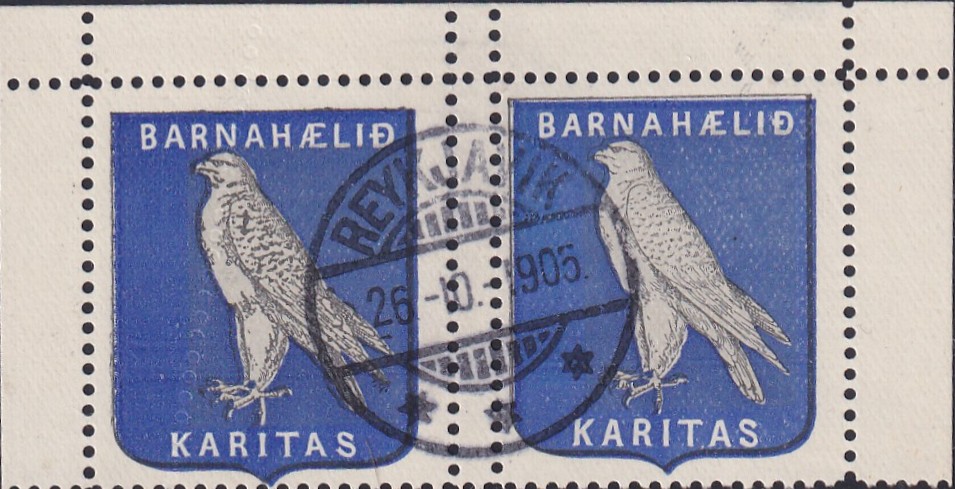
Three more interesting seal with black, gray variations. From Sarah Petterson collection.
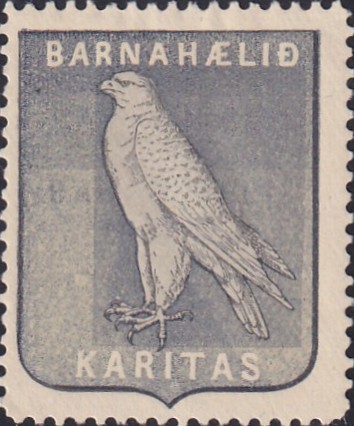
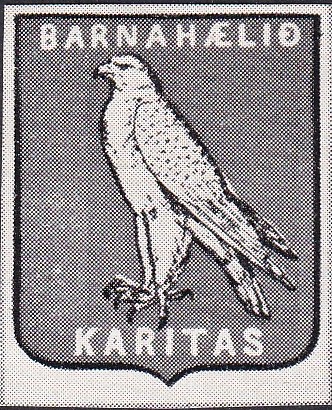
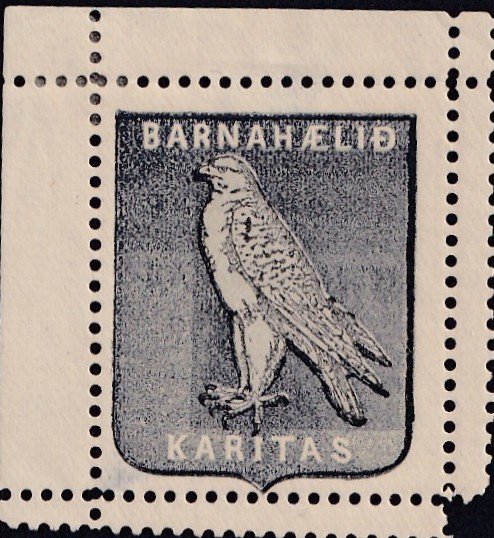
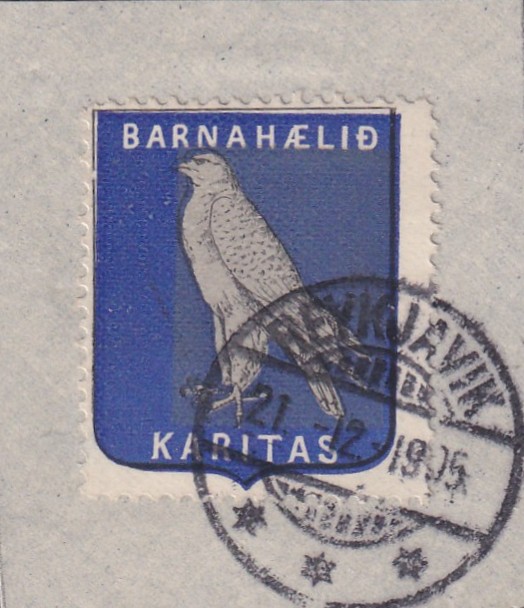
Very nice cancelation on Karitas 1905 issue, also from Sarah Petterson collection.
The Caritas 1911 issue- the story
In searching for sources about this issue, I came up completely empty‑handed. Yet the seal was nevertheless issued.
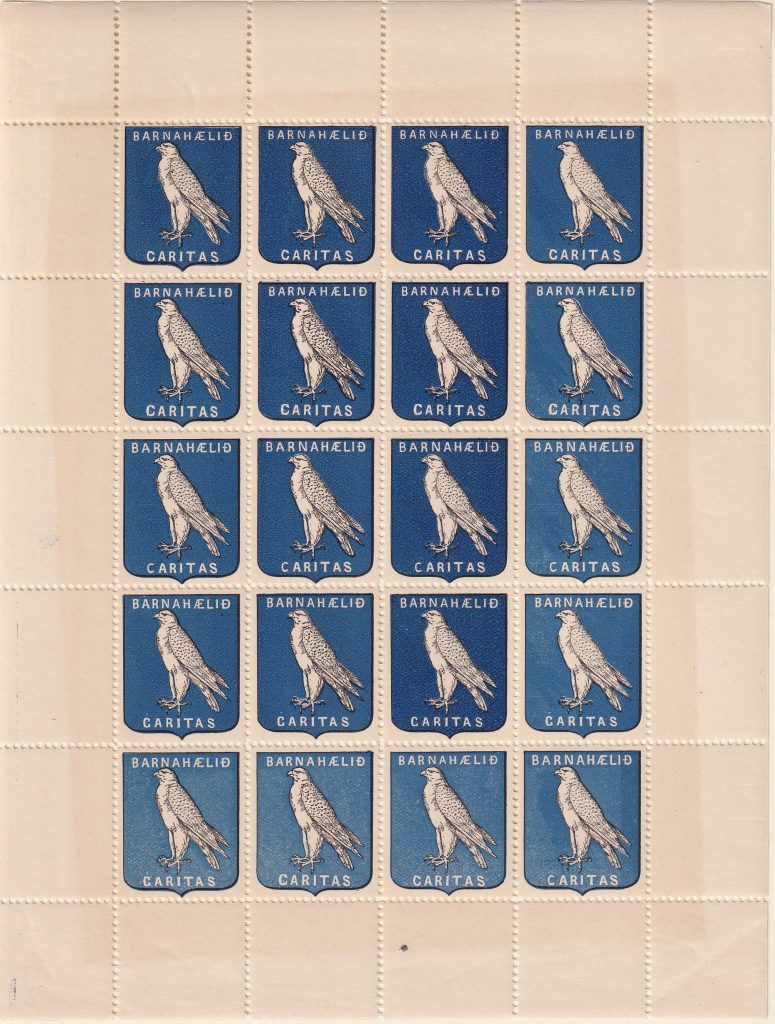
1911 issue, sheet of 20, color variation inside the sheet. This sheet is from Sarah Petersson collection.
The Caritas 1911 issue - the stamps
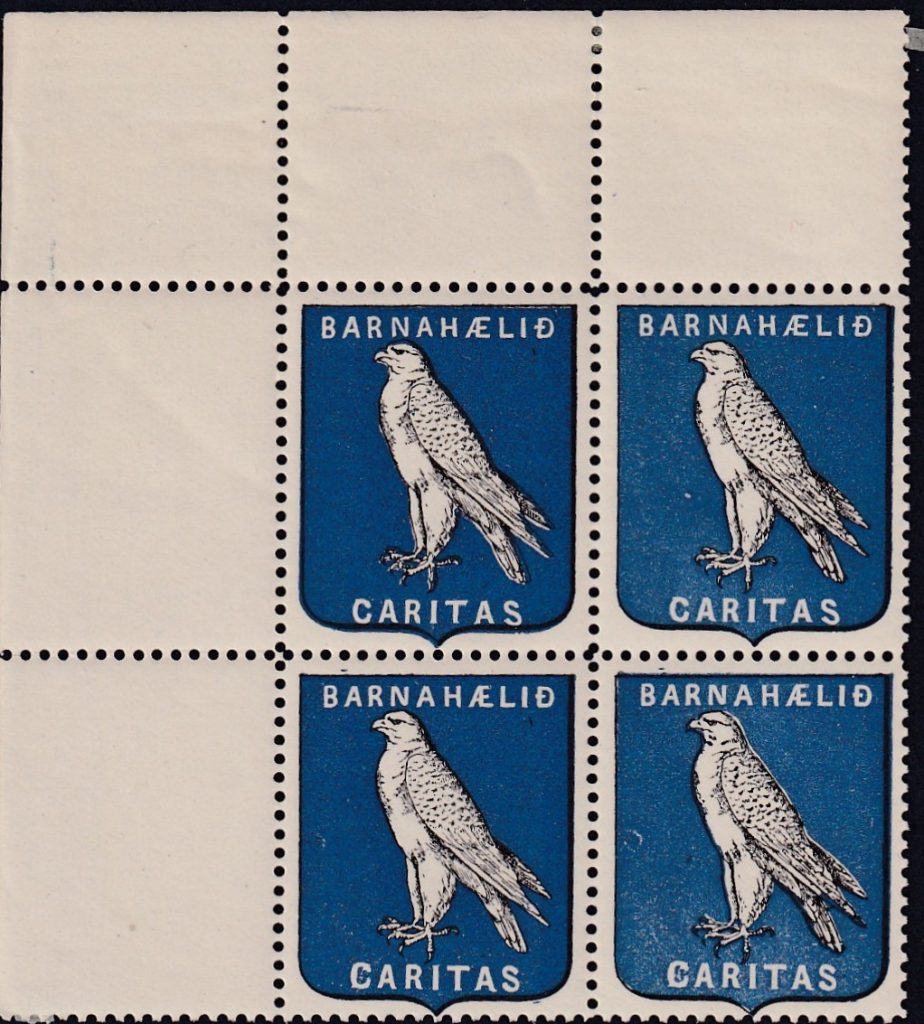
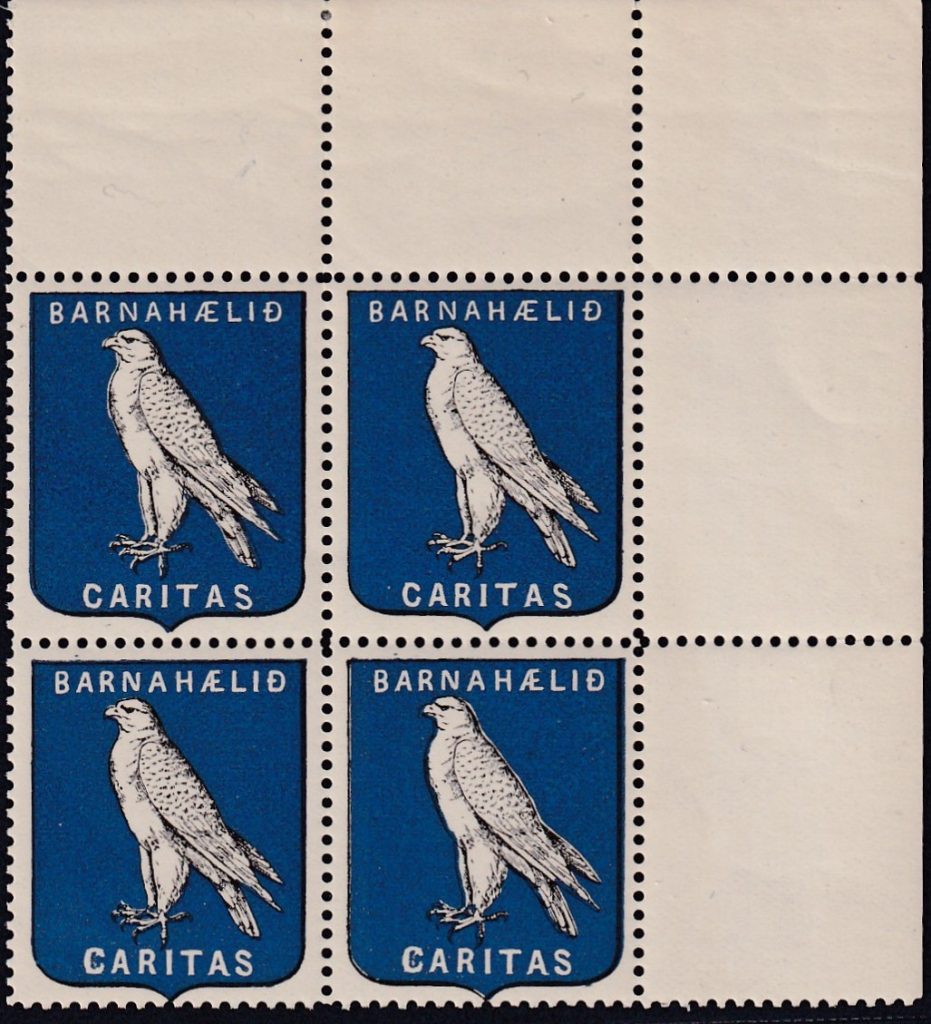
In the book by Haukur Valdimarsson and Þór Þorsteins, the seals are described as having dark blue and black colouring. There is no a silver overprint forming a kind of frame in this issue. Each sheet contained 20 seals.
Regarding the total quantity issued, I have not found any sources that provide that information.
One major difference between the 1904 seals and the later ones is that the name Caritas changes to Karitas. No sources explain why the name was altered, but it is reasonable to assume that this was done to adapt the seal to Icelandic conditions and to associate it with the women’s association Kvenfélagið Karitas. But in this issue it changes back from Karitas to Caritas. Why? With no contemporary sources available, one can only speculate whether this seal was in fact issued by Caritas in Denmark, and that this may be the reason why the name was later changed back again.
Two block of four from the 1911 issue.
Summary of the Caritas/Karitas Charity Seal and the Karitas Children’s Home
The Arrival of the 1904 Caritas Seal
The 1904 Caritas charity seal marks the beginning of organized fundraising for a children’s home in Iceland. The seal is believed to have arrived as a gift from Danish Caritas, reportedly through the involvement of Ragnheiður Hafstein, who later became chair of the women’s association Karitas. The proceeds from its sale were intended to support the establishment of a home for infants of impoverished mothers.
From Idea to Reality: 1905–1906
By 1906, contemporary newspapers confirm that the children’s home Karitas had begun operating in Reykjavík. The association behind it counted around fifty women, with Ragnheiður Hafstein as chair. The home cared for children aged three to eighteen months and appears to have operated for several years, though exact details about its location and closure remain unknown.
Design and Variations of the Seal
The seals show noticeable variation in colour and printing, and little is known about their production, quantity, or formal release date in Iceland. The name appears both as Caritas and Karitas, a change not explained in sources but likely intended to adapt the Danish initiative to Icelandic conditions and link it to the newly founded women’s association.
Gaps and Unanswered Questions
Despite confirmed contemporary reports of the children’s home, many aspects of the story remain unclear:
The role of Danish Caritas in the Icelandic initiative.
The role of Ragnheiður Stefánsdóttur.
Is the issue somehow linked to the new falkon flag for Iceland?
Where the seals were printed and how many were issued?
How does the name shift from Caritas to Karitas and then back to Caritas occur?
The exact release date of the 1904 seal in Iceland, the danish seal is issued 13/12 1904, so there is a small window for the Icelandic seal.
The fate of the Karitas association.
The precise timeline and location of the children’s home.
Why the operation eventually ended?
These gaps make the story both historically significant and intriguingly incomplete.
Later Developments: The Thorvaldsen Society
Around the same time, the Thorvaldsen Society established the Child Upbringing Fund in 1906, with Ragnheiður Hafstein serving on its board. Although the society intended to establish a similar children’s institution, this did not materialize until decades later. From 1913 onward, the society issued Christmas seals to support the fund — the same year Ragnheiður Hafstein passed away.
End of the Caritas/Karitas Seal Issues
After 1906, no seals are known to have been issued until 1910, and the Caritas/Karitas issues ceased entirely in 1911. The reasons for this discontinuation remain unknown.
In Summary
The 1904 Caritas seal is the first Icelandic charity seal and the catalyst for the establishment of the Karitas children’s home in 1906. While the existence of the home is confirmed, many details surrounding the seals, the association, and the broader initiative remain unanswered — leaving the story both remarkable and ripe for further research.
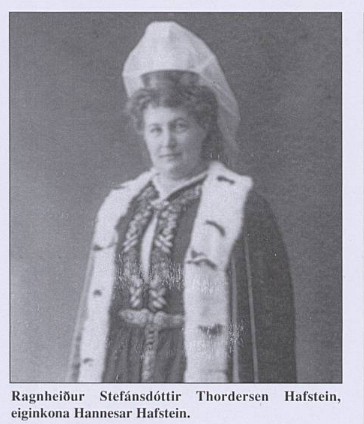
The photograph below depicts Ragnheiður Hafstein, whose leadership and involvement place her at the heart of the events and initiatives explored throughout this website. As the research has progressed, she has emerged as the central figure linking the Caritas Christmas Seals, the Karitas Children's Home, and several of the most important charitable initiatives of the period.
Below I have compiled into a single timeline the findings of my research into the origins of the Icelandic Caritas Christmas Seal, the Karitas Children's Home, and the individuals who played key roles in this history.
TIMELINE
From the Icelandic Falcon to the Caritas Christmas Seals and the Karitas Children’s Home (1897–1913)
| Date | Event | Content | Source |
|---|---|---|---|
| 1897 | Einar Benediktsson proposes that the Blue Falcon should become the coat of arms of Iceland and that a separate national flag should be adopted. | First known proposal to use the Icelandic Falcon as a national symbol. | Article by Einar Benediktsson. |
| 3 October 1903 | King Christian IX approves the new Coat of Arms of Iceland, featuring the Blue Falcon. | The Blue Falcon becomes the official coat of arms of Iceland. | Royal Decree. |
| 1 February 1904 | Home Rule comes into effect in Iceland. | Iceland gains its own Minister resident in Reykjavík. | Official records. |
| 1 February 1904 | Hannes Hafstein becomes Iceland’s first Minister. | Marks the beginning of Home Rule and a new era in Icelandic administration. | Official records. |
| December 1904 | The first Icelandic Caritas Christmas Seals are issued. | First Christmas Seal issue in Iceland, featuring the Blue Falcon as its principal design. | Contemporary sources. |
| 1905 | According to the obituary of Ragnheiður Hafstein, she initiates the establishment of the Children’s Home Society. | Preparatory work leading to the foundation of the Karitas Children’s Home. | Kvennablaðið, 30 July 1913. |
| 8 December 1905 | An article on the Caritas Christmas Seals appears in Þjóðólfur. | Contemporary coverage of the Caritas Christmas Seal issue. | Þjóðólfur. |
| December 1905 | Second annual issue of the Caritas Christmas Seals. | Establishes the seals as an annual publication. | Contemporary sources. |
| 29 March 1906 | At an extraordinary meeting, the Child Upbringing Fund of the Thorvaldsen Society is established. | Formal resolution establishing the Child Upbringing Fund. | 70th Anniversary Publication of the Thorvaldsen Society. |
| 31 March 1906 | A fundraising entertainment for the Children’s Home is announced. | First known fundraising event organized for the Children’s Home. | Reykjavík, 31 March 1906. |
| 5 April 1906 | Fundraising entertainment held at the Craftsmen’s Hall (Iðnaðarmannahúsið). | Organized fundraising prior to the opening of the Children’s Home. | Contemporary advertisement. |
| Early May 1906 | The Karitas Children’s Home begins operations. | The Children’s Home receives its first children. | Fjallkonan, 13 May 1906. |
| 13 May 1906 | Fjallkonan publishes a detailed article about the Children’s Home. | Ragnheiður Hafstein is identified as Chair of the Karitas Women’s Society and Guðleif Erlendsdóttir as superintendent. | Fjallkonan. |
| 23 May 1906 | Ragnheiður Hafstein joins the Board of the Child Upbringing Fund of the Thorvaldsen Society. | Establishes her formal connection with both the Karitas Women’s Society and the Thorvaldsen Society. | 70th Anniversary Publication of the Thorvaldsen Society. |
| Summer 1906 | Iceland’s National Telephone Service begins operation. | Development of Iceland’s national telecommunications system. | Official records. |
| 1906 (exact date unknown) | Telephone Stations adopt enamel signs displaying the Blue Falcon. | Another official use of the Blue Falcon as a national emblem. | Museum collections and photographs. |
| 6 August 1906 | A lottery is held during national celebrations at Landakot in aid of the Children’s Home. | Public fundraising event supporting the Children’s Home. | Þjóðviljinn. |
| 13 March 1907 | Applications for children’s summer admission are advertised. | Ragnheiður Hafstein and four other women receive applications. | Lögrétta. |
| 5 February 1908 | A charity lottery is announced. | Fundraising for the Children’s Home. | Lögrétta. |
| 8–9 February 1908 | Charity lottery held in Bárubúð. | Two-day fundraising event for the Children’s Home. | Contemporary newspapers. |
| 19 May 1908 | Charity concert held in support of the Children’s Home. | Performances by Elín Matthíasdóttir, Dr. Th. Balslev, Kristrún Hallgrímsson and G. Rasmussen. | Reykjavík. |
| 25 February 1910 | Applications for children’s summer admission are advertised. | A new group of women receives applications, including Cathinka Sigfússon. | Þjóðólfur. |
| 11 March 1910 | Charity entertainment held for the Children’s Home. | Hannes Hafstein participates by giving a poetry recital alongside other performers. | Þjóðólfur. |
| 29 April 1910 | Reykjavík City Council grants the Children’s Home permission to use two classrooms in the Reykjavík Primary School during the summer. | Municipal support through the provision of public facilities. | Ísafold, 30 April 1910. |
| 1911 | Final issue of the original Caritas Christmas Seals. | Marks the end of the first Caritas Christmas Seal series. | Contemporary sources. |
| 18 July 1913 | Ragnheiður Stefánsdóttir Hafstein dies. | Death of one of the central figures in the history of the Karitas Women’s Society and the Karitas Children’s Home. | Obituaries and memorial articles. |
| July 1913 (exact date to be confirmed) | The Ragnheiður Memorial Fund is established. | According to the Reykjavík City Archives, the assets of the Karitas Children’s Home were transferred to the newly established fund. The exact date of its establishment remains to be confirmed from the original documents. | Reykjavík City Archives. |
| 27 July 1913 | Hannes Hafstein sends a letter of thanks regarding the establishment of the Ragnheiður Memorial Fund. The letter is addressed to the Children’s Home Society. | Letter preserved among the records of the Ragnheiður Memorial Fund. | Reykjavík City Archives. |
| 30 July 1913 | A memorial article on Ragnheiður Hafstein is published in Kvennablaðið. | Ragnheiður is credited with initiating the establishment of the Children’s Home Society in 1905, and the Children’s Home is described as one of her principal life’s achievements. | Kvennablaðið. |
| 1913 | The Child Upbringing Fund of the Thorvaldsen Society issues its first Christmas Seal. | Beginning of the Thorvaldsen Society’s Christmas Seal issues in Iceland. | Thorvaldsen Society. |
| 1913 | Iceland adopts a new coat of arms, replacing the Blue Falcon of 1903. | Marks the end of the first official period of the Blue Falcon as Iceland’s coat of arms. |
Summary of this timeline.
This timeline presents the principal events related to the emergence of the Icelandic Caritas Christmas Seals, the establishment and development of the Karitas Children’s Home, and the broader historical context in which these initiatives evolved between 1897 and 1913.
It places the history of the Christmas Seals within the wider framework of Iceland’s political and social transformation during the Home Rule period, including the adoption of the Blue Falcon as the national coat of arms, the appointment of Hannes Hafstein as Iceland’s first Minister, and the philanthropic work led by Ragnheiður Hafstein and the Karitas Women’s Society.
The timeline also documents the development of the Karitas Children’s Home through contemporary newspaper reports, fundraising events, municipal support, and archival records, culminating in the establishment of the Ragnheiður Memorial Fund in 1913. Finally, it records the transition from the Caritas Christmas Seals to the first Christmas Seal issued by the Child Upbringing Fund of the Thorvaldsen Society, marking the beginning of a new chapter in Icelandic Christmas Seal history.
The chronology is based on contemporary newspapers, archival documents, official records, and other primary sources, and serves as a foundation for further research into the origins and development of Icelandic Christmas Seals and their relationship to Icelandic social welfare and national identity.
As my research progresses and new information comes to light, I will continue to expand this timeline. Hopefully, the questions identified here will gradually be answered.
Fast forward to 1953....
The 1953 Christmas Seals Jubilee Exhibition in Copenhagen
A Celebration of the Origins of the Christmas Seal Movement
In November 1953, Copenhagen hosted a remarkable event: the Christmas Seals Jubilee Exhibition, held from 13–15 November to commemorate the 50th anniversary of the world’s first Christmas seal, issued in Denmark in 1904. The exhibition brought together collectors, historians, charitable organizations, and postal enthusiasts to celebrate the origins and development of the Christmas seal movement — a philanthropic tradition that would eventually spread across the globe.
Honoring the First Christmas Seal (1904)
The exhibition centered on the groundbreaking Danish Christmas seal of 1904, created by Einar Holbøll, a Danish postal clerk who conceived the idea of selling small charity labels at Christmas to raise funds for children suffering from tuberculosis. His idea became an immediate success and inspired similar initiatives in many countries.
The 1953 commemorative sheet issued for the exhibition prominently featured the original 1904 Danish seal, depicting Princess Louise, symbolizing the birth of the movement.
Iceland’s Caritas Seal Recognized Internationally
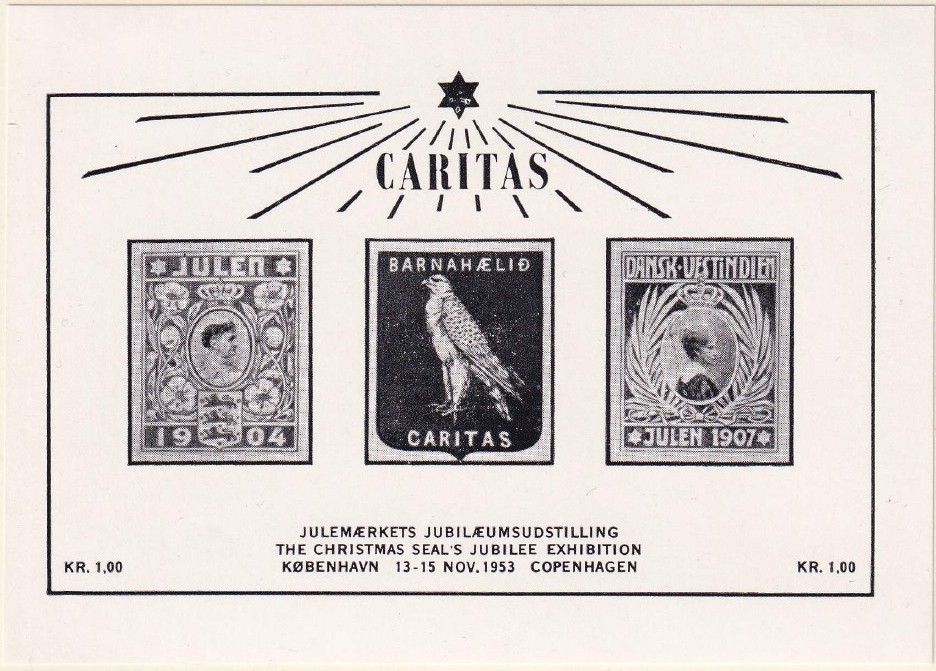
One of the most striking aspects of the 1953 sheet is the inclusion of the Icelandic Caritas seal of 1904, placed at the center of the design. Its presence confirms that Danish organizers regarded the Icelandic issue as part of the early international expansion of the Christmas seal concept.
The Icelandic seal — showing the Icelandic falcon on a blue field — was originally sent to Iceland as a charitable gift from Danish Caritas. Although Icelandic documentation from the period is sparse, the 1953 exhibition sheet serves as a powerful external confirmation that Denmark considered the Icelandic seal an authentic Caritas issue and a legitimate part of the movement’s early history.
The Danish West Indies Seal (1907)
The third stamp depicted on the commemorative sheet is the 1907 Christmas seal from the Danish West Indies, another early example of the movement’s spread beyond Denmark’s borders. Its inclusion highlights the rapid international adoption of charity seals in the first decade of the 20th century.
Purpose and Significance of the Exhibition
The Jubilee Exhibition served several purposes:
Celebration of 50 years of charitable work through Christmas seals
Recognition of international contributions, including Iceland’s early participation
Promotion of tuberculosis prevention, still a major public health concern in the 1950s
Fundraising, as the commemorative sheet was sold for 1 krone to support health charities
The event also strengthened the cultural and historical identity of Christmas seals as more than mere collectibles — they were symbols of solidarity, public health, and international cooperation.
The 1953 Commemorative Sheet
The sheet issued for the exhibition is now a sought‑after item among collectors. Its design features:
A golden star above the title CARITAS
Three historically significant seals (1904 Denmark, 1904 Iceland, 1907 Danish West Indies)
Bilingual text: JULEMERKETS JUBILEUMSUDSTILLING / THE CHRISTMAS SEALS JUBILEE EXHIBITION
The dates and location: Copenhagen, 13–15 November 1953
A symbolic price of KR. 1.00 printed on both sides
The sheet is not a postal item but a commemorative fundraising piece, created specifically for the exhibition.
Legacy
The 1953 Jubilee Exhibition marked a turning point in the historical awareness of Christmas seals. It acknowledged the movement’s origins, celebrated its international reach, and preserved its early artifacts for future generations. For Iceland, the inclusion of the Caritas seal on the commemorative sheet is especially meaningful: it confirms Iceland’s role in the earliest chapter of Christmas seal history and provides rare external documentation of the 1904 issue.
Today, the 1953 sheet stands as a testament to the enduring impact of a simple idea — that a small charity label could help change the world.
Two sheets from 1953, one black printed, from Sarah Peterson collection.
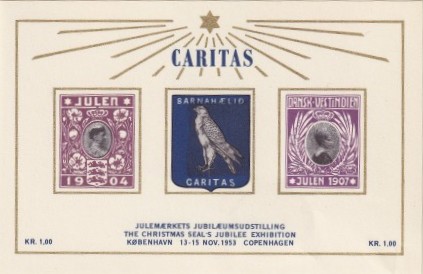
Now to 1958..Christmas Seal Exhibition in Copenhagen
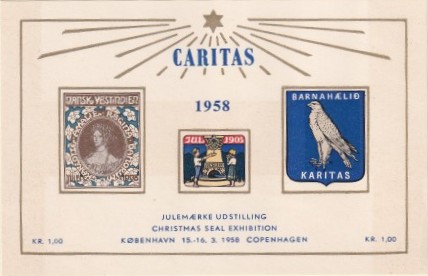
In March 1958, Copenhagen hosted a special Christmas Seal Exhibition, held on 15–16 March as part of the annual meeting of the Danish Christmas Seal Collectors Association (Danmarks Julemærkesamler Forening). The event marked five years since the successful Jubilee Exhibition of 1953, which had celebrated the 50th anniversary of the world’s first Christmas seal.
The 1958 exhibition brought together collectors, historians, and enthusiasts from across the Nordic countries. It showcased early Christmas seals, international issues, promotional artwork, and a large archive of charity labels. A commemorative sheet was produced for the occasion, featuring three historic seals—including the Icelandic Barnahælið Karitas seal—highlighting Iceland’s role in the early development of the Christmas seal movement.
Held in the Berlingske Tidende lecture hall in central Copenhagen, the exhibition reflected both the growing popularity of Christmas seal collecting and the continued importance of charity seals in public health fundraising. With strong support from Danish cultural institutions and participation from Nordic philatelic societies, the 1958 exhibition helped preserve and promote the early history of Christmas seals for future generations
A mini sheet issued to commemorate the exhibition.
This concludes, for now, the discussion of the Karitas charity seal and its history. Research on this subject will continue, and any new findings will be added here as they emerge. It should be noted that the text for the the first Christmas seal and 1953 and 1958 stamp exhibitions was prepared with the assistance of AI. Ai was also used to make summary of our story.
More information about the 1953 and 1958 minisheets..
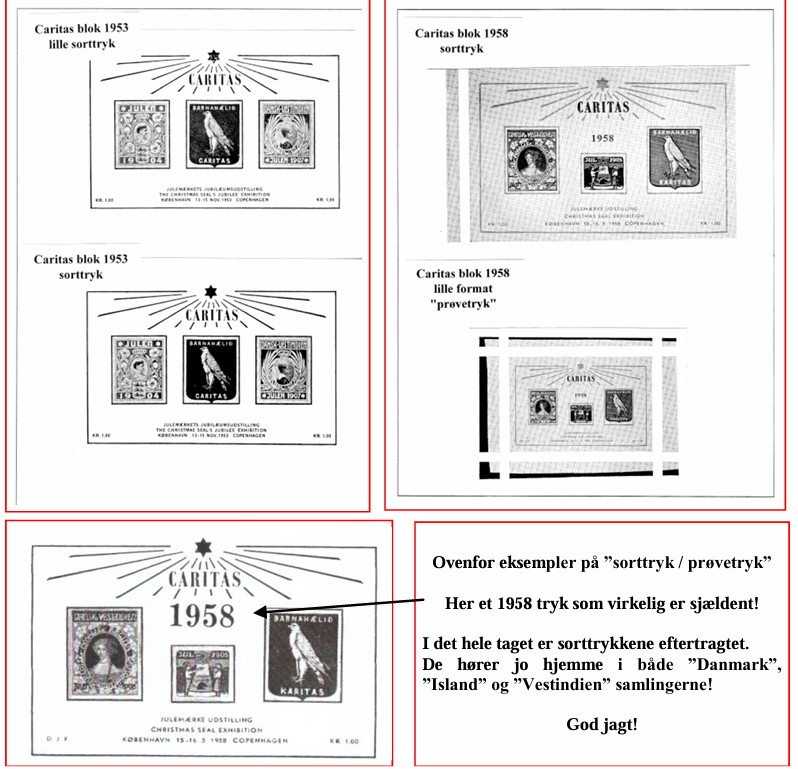
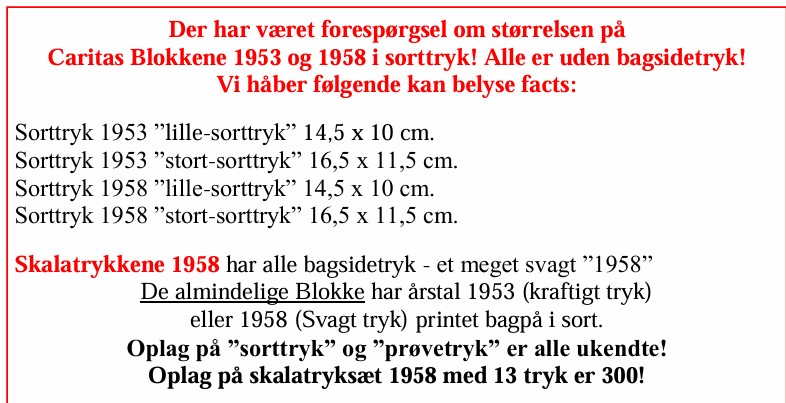
The above illustrations are taken from the journal Caritas, published by the Aarhus Christmas Seal Collectors Association, August 2015.
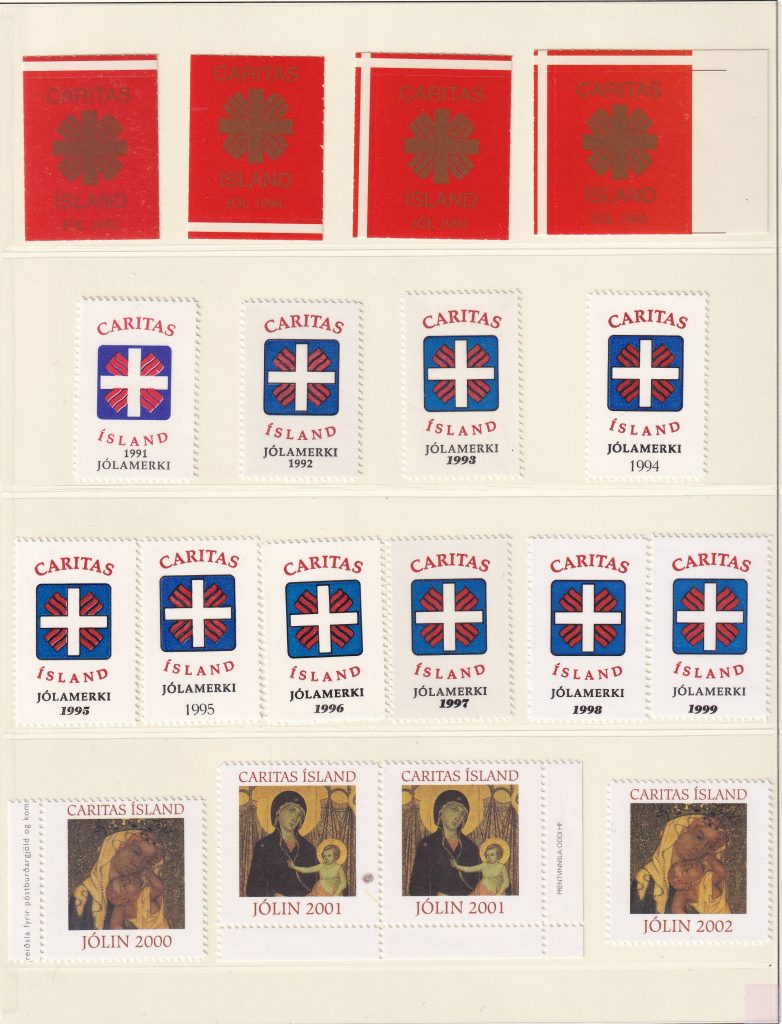
More to come.. the 1990 issue of Caritas Iceland..