First Icelandic cancels

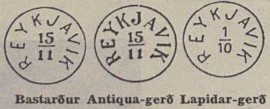
Danish cancels were used in Iceland from 1870. When the Icelandic skilding stamps were issued in 1873, the use of Antiqua cancels began, as well as the use of Lapidar/Grotesk cancels. Here below is shown the difference between Antique and Lapidars cancels. Antiqua cancels are with bold letters but lapidar are thinner. But there is the third type; Bastarður or Bastard, that means that some cancels if they broke it was possible to take letters and move between cancels, so they where combination of both Antiqua and Lapidar cancels.  

(Based on Sigurður H Þorsteinsson, Lesbók Morgunblaðsins 05/2/1967, Þór Þorsteinsson, Íslenskir stimplar, 2003.)

Antiqua_Lapidar cancels are also on my collecting list, but I have just stared to collect them but here is my small collection so far.

Here is one very fine postcard sent from Breiðdalsvík 1909, with two numeral cancels and very good Djúpivogur. 

Here is another sent from Búlandsnesi to Reykjavík 1909.

Brjefspjald from Sauðlauksdal from 1898.

 Written in Sauðlauksdalur 14/6 1898 and sent from Brjánslækur with “Bæjarpósti” (local town post?) to Ísafjörður, cancelled 16/6 in Dýrafjörður and at arrival 17/6 in Ísafjörður. 

Here is very interesting postcard from 1911, sent from Reykjavik to Djúpivogur, the front is with picture of Miss Carrie Moore. Google says that she is a famous Australian actress. But the on the back of this postcard are many interesting things!  I can see seven cancelations. Kirkjubæjarklaustur, Hraungerði and Reykjavik, but the other four are cloudy but if you can find out the other cancels please let me know. 

Here are three covers from Grenjarðarstaður, Sauðarkrókur og Strandasýsla

Here is Brefspjald that has travelled a lot!

One nice postcard from 1907 with good Þingeyjarsýsla cancel sent from Húsavík to Reykjavík. 

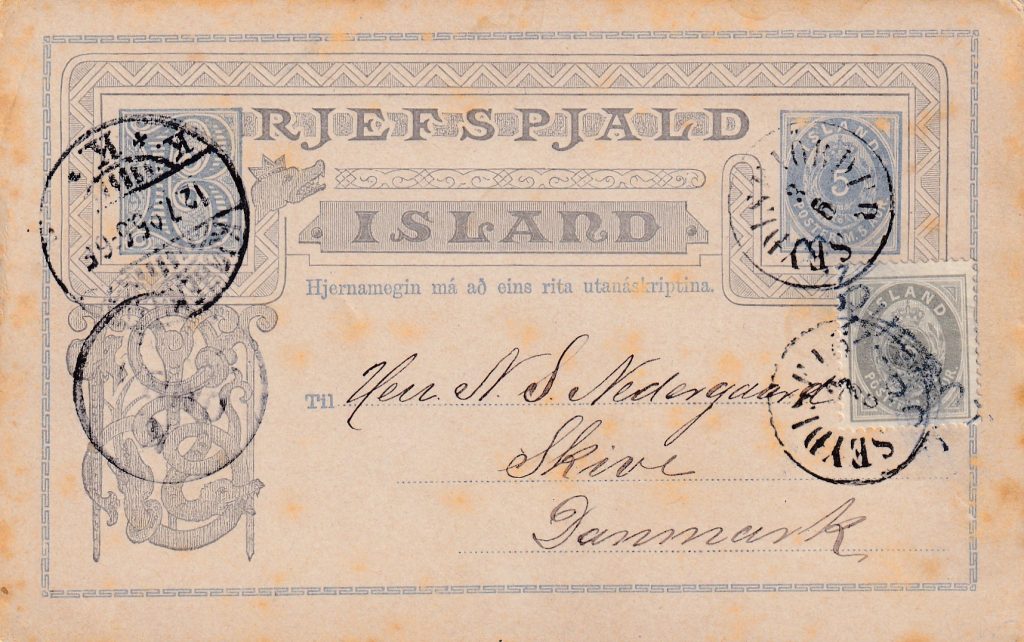
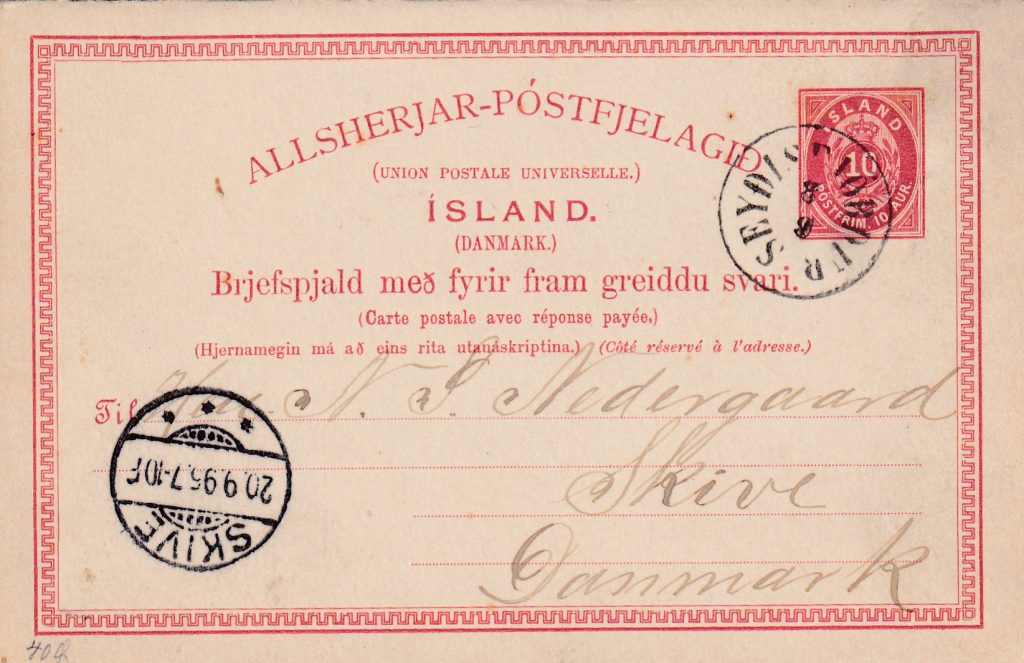
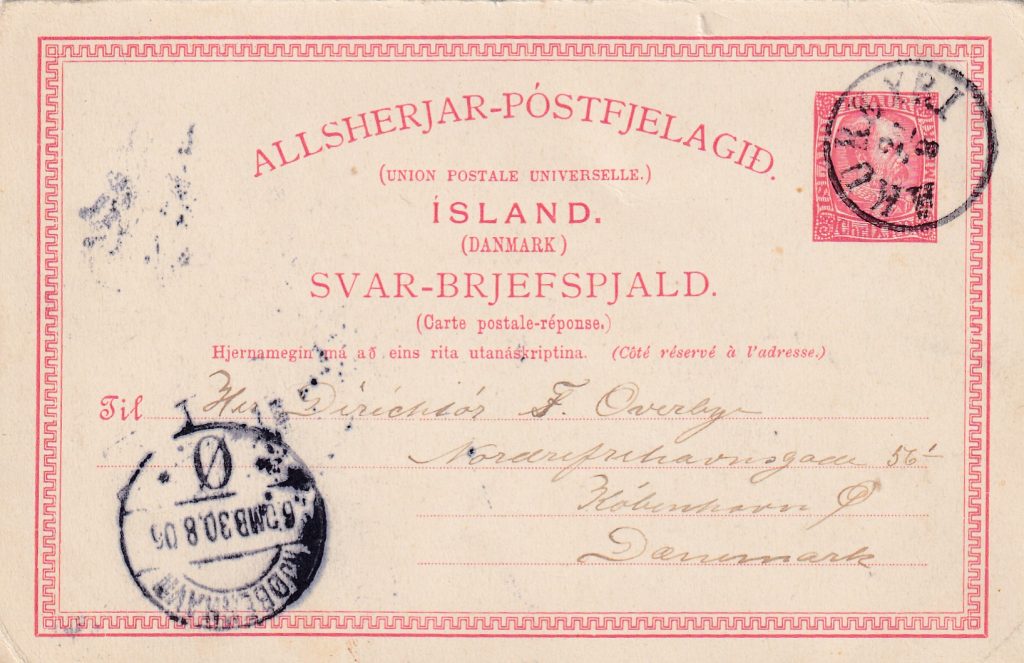
Here are three Bréfspjöld, two from the year 1895 with very good Seyðisfjörður cancel and one with decent Akureyri cancel. 

Steingrímur Thorsteinsson (1831–1913)

Poet • Educator • Rector of the Learned School

Steingrímur Thorsteinsson was one of Iceland’s leading cultural figures of the 19th century. Born in Reykjavík in 1831, he studied at the Learned School (Lærði skólinn) and later returned as a teacher of languages. He became Head Teacher and eventually Rector, a position he held from 1880 to 1904, shaping the education of an entire generation during a period of rising national awareness.

As a poet, Steingrímur is closely associated with Icelandic Romanticism. His work often reflects themes of nature, national identity, and emotional depth. Among his best‑known poems are Hjartað, Vorblót, Til Íslands, and Svanasöngur á heiði.

One of his most enduring contributions is the text of the patriotic song “Öxar við ána”, with music composed by Helgi Helgason. The song is strongly linked to Þingvellir and remains a familiar part of Icelandic cultural heritage.

Steingrímur was also a prolific translator, bringing major works of world literature into Icelandic. He died in 1913, leaving a lasting legacy in Icelandic literature and education.
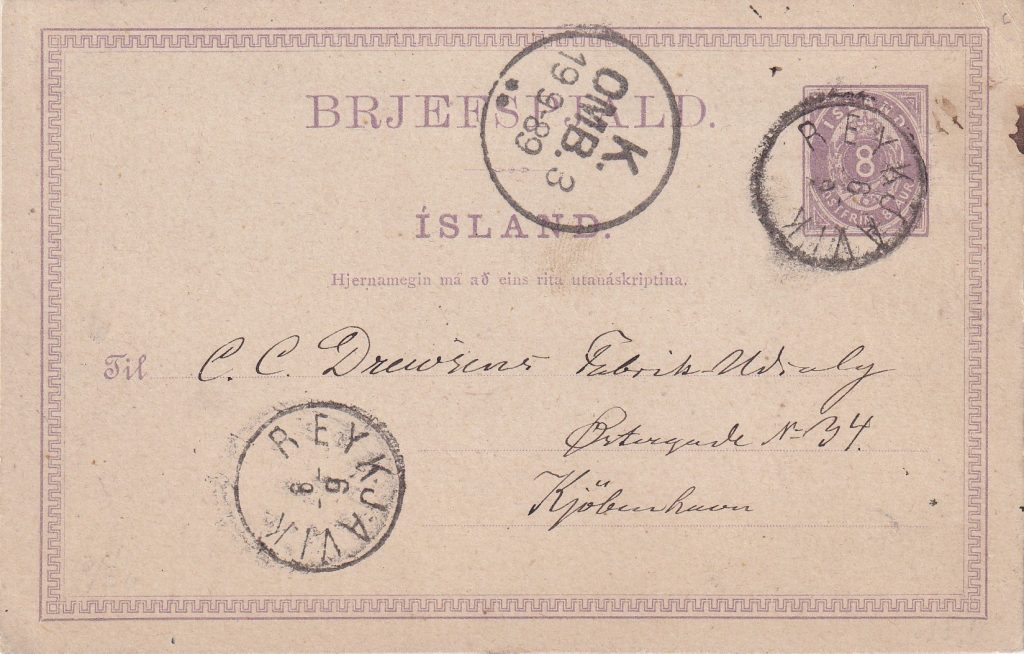
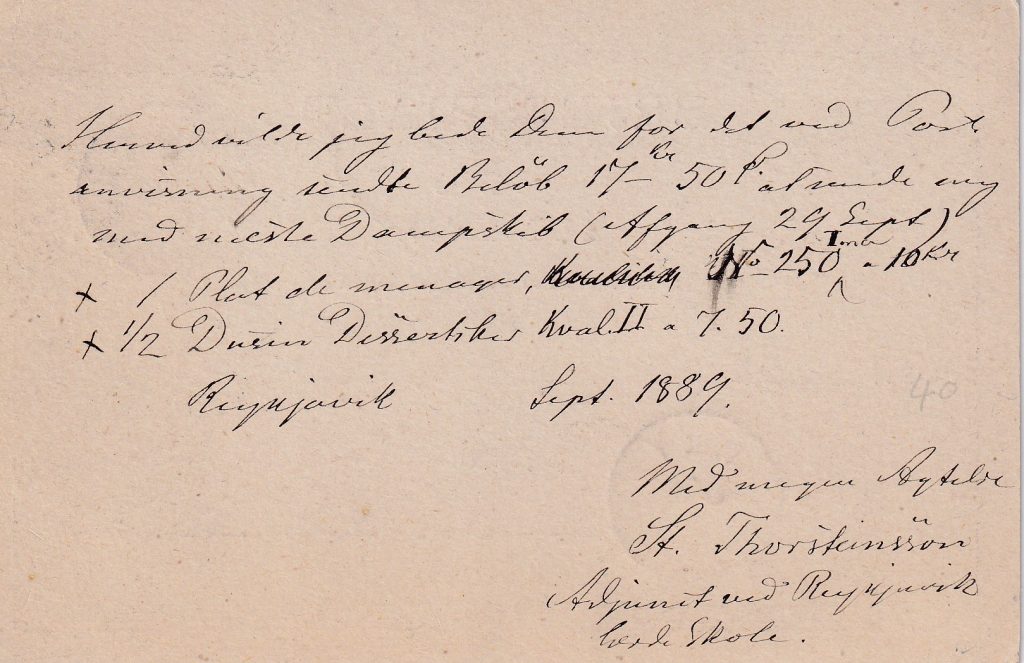
Here one can see a letter written by Steingrímur Thorsteinsson in 1889, sent to Denmark, in which he appears to be ordering supplies for the Learned School. The letter shows him handling practical administrative matters on behalf of the institution, reflecting his role as Head Teacher and later Rector.

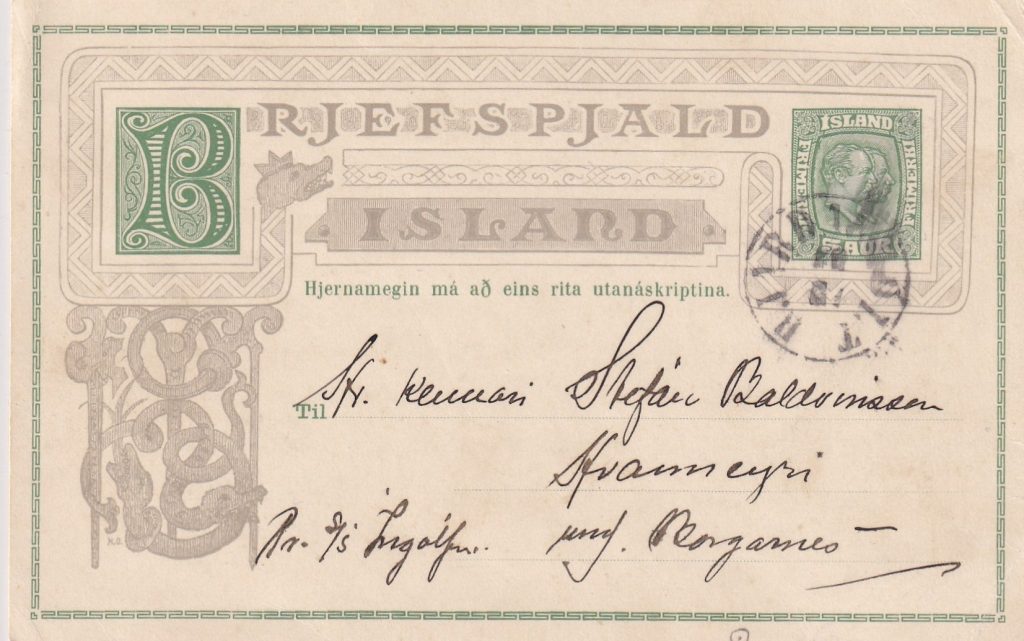
Brjefspjald with the cancel Hjarðarholt, sent with the ship Ingólfur 1/6 1906.

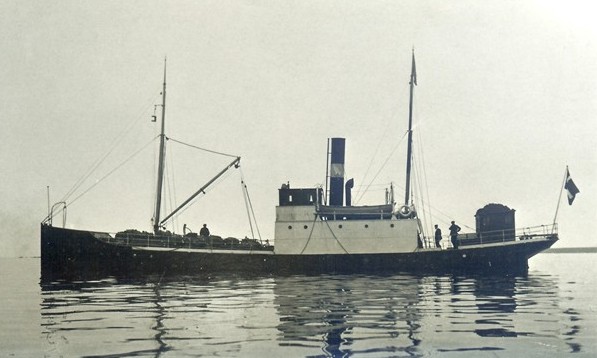
The steamship Ingólfur

Ingólfur was built at the Mjellem & Karlsen shipyard in Bergen, Norway, in 1908 for the Faxaflói Steamship Company (Gufubátsfélag Faxaflóa h/f) in Reykjavík. Constructed of steel and wood, the vessel measured 126 gross register tons and was powered by a 150‑horsepower, two‑cylinder compound steam engine. Ingólfur arrived in Reykjavík for the first time on 9 May 1908, following an eight‑day voyage from Bergen.

Ingólfur was the first motor‑powered passenger and cargo vessel built specifically for Icelanders, operated with an Icelandic captain and Icelandic crew. From 1908 to 1918, it served as a postal and passenger ship in Faxaflói Bay, sailing between Reykjavík, Akranes, and Borgarnes. It also made occasional trips to the Suðurnes region and to Búðir on the Snæfellsnes peninsula.

The ship’s captain throughout its entire Icelandic service was Sigurjón Pétur Jónsson, originally from the Eyrarbakki area. Ingólfur was sold to Norway in 1919.